
How Alebon Cut Order Time to Under 3 Minutes Across Eastern Europe
Eastern Europe's largest kebab distributor needed a mobile ordering system that worked on slow connections for non-technical users. easy.bi built a predictive platform that processes next-day delivery orders in under 3 minutes.
The Challenge: Thousands of Stores, Unreliable Connections, Zero Tech Skills
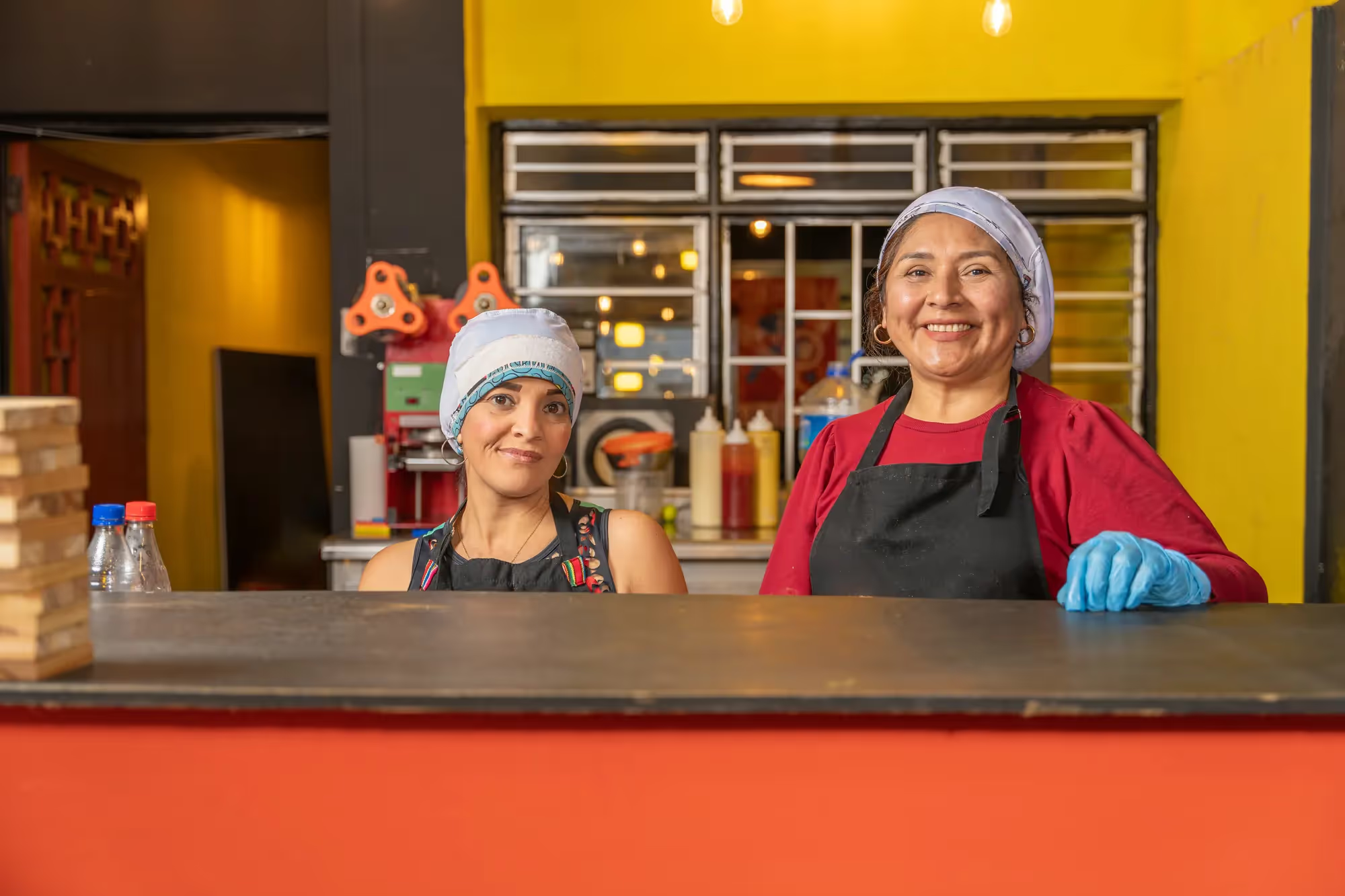
Alebon is the largest kebab distributor in Eastern Europe. Their network spans thousands of stores across multiple countries - from high-traffic urban locations to small shops in rural areas with intermittent internet connectivity.
The ordering process was a daily bottleneck. Store owners called in orders by phone, sent WhatsApp messages, or used paper forms faxed to regional warehouses. Every method introduced errors. Wrong quantities. Missed delivery windows. Stock-outs during peak hours that cost store owners revenue and damaged Alebon's reliability.
Digitizing this process sounded straightforward. It wasn't. Most store operators had limited technical skills and no patience for complex login flows or multi-step forms. Many relied on older smartphones with restricted bandwidth. A solution that required a desktop browser or stable 4G connection would fail before launch.
Alebon needed an ordering system so simple that a store owner could place a next-day delivery order between customers - in under 3 minutes, on any device, on any connection. And it had to be smart enough to suggest what they'd likely need before they even searched for it.
“Our store owners were calling in orders between serving customers. Half the time, the warehouse couldn't read the handwriting. We needed something they could use with one hand while working the grill.”
Why Alebon Chose easy.bi
Alebon had explored off-the-shelf order management systems. Every option assumed stable internet, technical users, and standard e-commerce flows. None fit a distribution network where the primary user might be placing orders while serving customers from a kebab grill.
easy.bi's approach was different. Rather than forcing Alebon's workflow into existing software, the team proposed building a mobile-first, low-bandwidth ordering system with predictive ordering built in from day one. The technical demo showed a working prototype in 14 days - fast enough for Alebon to validate the concept with real store owners before committing to full development.
“Other vendors showed us standard e-commerce platforms. easy.bi showed us a prototype that already worked on a cheap smartphone with bad signal. That was the difference.”
The Approach: Mobile-First, Prediction-Driven
The easy.bi team started by shadowing store owners during their ordering process. This field research revealed a critical insight: most stores order roughly the same items each week, with minor variations based on seasonality and local demand.
Predictive ordering engine. Instead of presenting a blank catalog, the system analyzes each store's past orders and pre-populates a suggested order. Store owners review, adjust quantities, and confirm. For 70% of orders, the prediction matches exactly - turning a 15-minute phone call into a 90-second confirmation tap.
Low-bandwidth mobile interface. The frontend was engineered for connections as slow as 2G. Compressed data payloads, progressive loading, and offline-capable order drafts meant store owners could start an order during a connectivity gap and submit it when signal returned. No app store download required - the system runs as a mobile web application.
Regional delivery slot management. Eastern Europe's logistics are complex. The system maps each store to its regional warehouse and displays only available delivery slots for that specific route. No confusion about when orders arrive. No missed windows.
The entire interface was designed around one principle: a store owner should complete an order faster than making a phone call. Every screen was tested with real users in the field, iterated based on feedback, and simplified until the average order took under 3 minutes.
“The team spent time in our stores watching how orders actually happen. That field research shaped every design decision - and it shows in the adoption numbers.”
The Results: Faster Orders, Fewer Errors, Happier Stores
The platform replaced phone-based ordering across Alebon's entire distribution network. Order completion time dropped from 15+ minutes to under 3 minutes. Error rates from manual transcription dropped to near zero. Warehouse teams received clean, structured data instead of handwritten notes and voicemail messages.
The predictive engine proved its value immediately. Stores that adopted the platform reported better stock management - fewer emergency reorders and fewer unsold items at end of week. Alebon's supply chain team gained real-time visibility into demand patterns across regions, enabling smarter inventory allocation.
Most importantly, adoption was high because the system respected its users. Store owners didn't need training. They opened the app, saw what they usually order, adjusted if needed, and tapped confirm. Technology that disappears into the workflow is technology that gets used.
“Our reorder accuracy improved overnight. The predictive engine knows what each store needs better than the store owners remember. Fewer stock-outs, fewer emergency deliveries, lower costs.”
Key Takeaways
- Design for the actual user, not the ideal user. Field research with store owners revealed that low bandwidth, older devices, and zero tech skills were the norm - not edge cases. Building for reality drove adoption.
- Prediction beats navigation. When 70% of orders are repetitive, showing users what they probably need is faster than making them search a catalog. Pre-populated orders turned a 15-minute task into 90 seconds.
- Mobile-first doesn't mean app-first. A progressive web app eliminated the app store barrier entirely. Store owners accessed the system from a browser link - no downloads, no updates, no friction.
Ready to achieve similar results?
Speak directly with our experts. Book a 20-minute Expert Call.
Start with a Strategy CallProject Snapshot
More success stories


Multi-brand e-commerce platform with SSO for outdoor brands

Order processing middleware for multi-store Shopify operations