How PENNY Delivered a Personalized Retail App to Millions of Shoppers
PENNY needed a mobile app that turned weekly flyers into digital experiences. easy.bi built it with Firebase, Vue.js, and TypeScript - delivering personalized coupons, smart shopping lists, and real-time data sync.
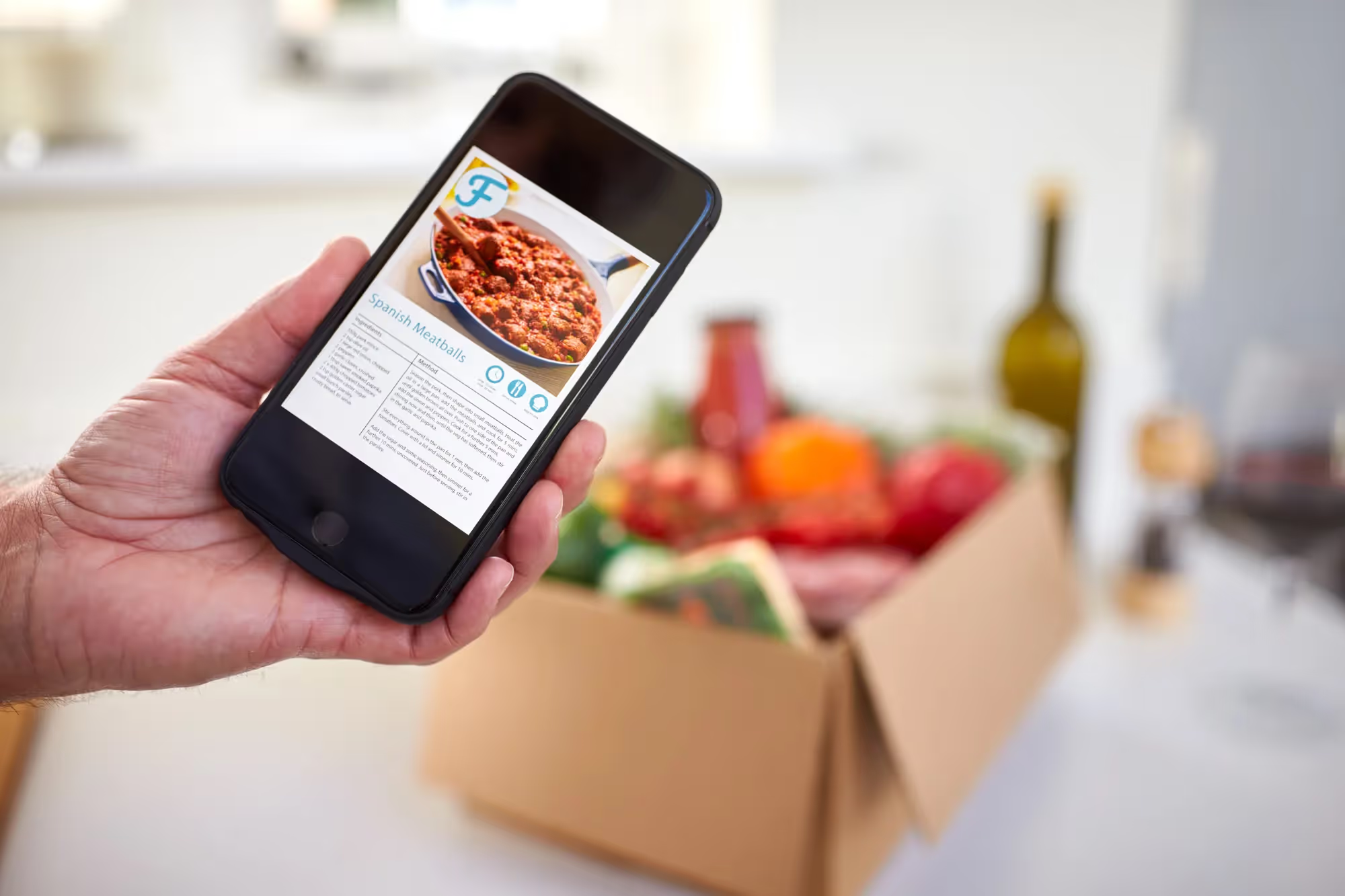
The Challenge: Connecting a Discount Retailer to the Mobile Customer
PENNY is one of Europe's largest discount retailers, part of the REWE Group. With thousands of stores across Germany, their customer base spans every demographic - from students checking weekly deals to families planning their grocery runs. The common thread: everyone has a smartphone, and everyone wants to save money.
PENNY's marketing relied heavily on physical weekly flyers and in-store promotions. Customers who wanted deals had to pick up a paper flyer, remember to bring it to the store, and manually check which coupons applied to their purchase. The process was analog in a world that had gone digital.
Competitors were pulling ahead. Retail apps from other chains offered digital coupons, loyalty tracking, and personalized deals. PENNY's customer base expected the same experience. Without a mobile presence, PENNY risked losing price-sensitive customers to competitors who made saving easier.
The app needed to do more than digitize the flyer. PENNY wanted personalized coupons, digital barcode scanning at checkout, smart shopping lists, and real-time synchronization across devices - all built on infrastructure that could handle millions of users during peak shopping hours.
“Our customers wanted digital deals and personalized savings. Every week they picked up a paper flyer. We needed to put that experience - and more - in their pocket.”
Why PENNY Chose easy.bi
Building a retail app for millions of users requires more than frontend skills. The backend needs to handle massive concurrent loads, the data layer needs real-time synchronization, and the codebase needs to be testable at scale. PENNY needed a team that could architect for reliability from the start.
easy.bi brought the right technology stack and the right engineering discipline. The team had experience with Google Firebase at scale, TypeScript for type-safe codebases, and Vue.js for responsive mobile interfaces. Equally important, easy.bi's commitment to automated testing with Mocha meant the app would be reliable from launch - not patched after problems surfaced.
“easy.bi built the app to handle millions of users from the start. The Firebase architecture means we don't worry about Black Friday traffic or holiday shopping spikes. It just scales.”
The Approach: Build for Millions From Day One
TypeScript foundation. The entire codebase was built in TypeScript, providing type safety that prevents entire categories of bugs before they reach production. For a retail app serving millions, every prevented error is thousands of users who don't experience a crash or a failed coupon scan.
Google Firebase infrastructure. Firebase provided the backbone - Authentication for secure user accounts, Cloud Storage for media and assets, and Cloud Functions for serverless business logic. Firebase's real-time database enabled instant data synchronization across devices. A customer who adds an item to their shopping list on their phone sees it immediately on their tablet. Coupons activate the moment they're assigned, not after a sync delay.
Vue.js responsive interface. The app's frontend was built with Vue.js, optimized for the fast, fluid interactions that retail customers expect. The weekly flyer is browsable and searchable. Coupons display with clear activation buttons and usage status. The shopping list is drag-and-drop reorderable. Every interaction was designed to feel instant.
Core feature development. The app delivered five key features: exclusive coupons personalized to each user's shopping patterns, personalized customer accounts with purchase history and preferences, a digital barcode system for seamless checkout scanning, a smart shopping list that remembers frequent items and suggests additions, and a digital weekly flyer that replaces the paper version with a richer, searchable experience.
Automated testing with Mocha. Every feature was covered by automated tests written in Mocha. The test suite runs before every deployment, catching regressions before they reach users. For a retail app where a broken coupon or a failed barcode scan directly impacts customer trust, automated testing is not optional - it's the foundation of reliability.
“The TypeScript codebase and Mocha test suite give us confidence when we ship updates. We push new features weekly and the automated tests catch issues before users ever see them.”
The Results: A Retail App That Customers Actually Use
The app transformed how PENNY customers interact with the brand. The digital weekly flyer replaced paper for engaged users. Personalized coupons gave customers reasons to open the app before every shopping trip. The digital barcode system made checkout faster than fumbling with paper coupons.
Real-time synchronization across devices proved particularly valuable. Families share shopping lists - one person adds items at home, another checks the list in the store. The Firebase-powered sync ensures both see the same data instantly, without refresh buttons or delays.
The automated testing foundation paid off from launch day. The app has maintained high reliability through feature updates, seasonal promotions, and traffic spikes during holiday shopping periods. Users trust it because it works consistently - the most important feature of any retail tool.
“Customers tell us the shopping list feature changed how they plan their weekly groceries. Adding items at home and checking them off in the store - it sounds simple, but the real-time sync makes it feel magical.”
Key Takeaways
- Type safety prevents bugs at scale. TypeScript caught errors during development that would have become crashes for millions of users in production. For high-traffic retail apps, type safety is a reliability strategy.
- Firebase enables real-time features without infrastructure overhead. Real-time sync, authentication, and serverless functions - all managed by Google - let the team focus on features instead of infrastructure management.
- Automated testing is non-negotiable for retail apps. A broken coupon or failed barcode scan erodes customer trust instantly. The Mocha test suite ensures every release is verified before it reaches a single device.
- Personalization drives engagement. Generic apps get deleted. Personalized coupons, remembered shopping items, and customized deals give customers a reason to open the app before every shopping trip.
Ready to achieve similar results?
Speak directly with our experts. Book a 20-minute Expert Call.
Start with a Strategy CallProject Snapshot
More success stories


Multi-brand e-commerce platform with SSO for outdoor brands

Order processing middleware for multi-store Shopify operations